
Commercial heating and air conditioning systems serve the same purpose as residential systems by maintaining a comfortable environment. However, the differences between them are significant beyond just providing comfort.
Commercial HVAC systems are typically larger, more powerful, and must address specific business-related issues for success. Therefore, you need a commercial HVAC contractor in Franklin Township that understands the unique requirements of your property, rather than merely applying residential HVAC knowledge.
A common term you might have encountered is “tonnage,” as in “What tonnage does a business need for effective climate control?” Contrary to what it sounds like, tonnage does not refer to the weight of an HVAC system but to its cooling and heating capacity. Determining the appropriate tonnage for a commercial or industrial facility is a crucial part of the work we do for commercial business owners in our community.
What Does Tonnage Mean in Commercial HVAC Services?
Tonnage in commercial HVAC services refers to a system’s cooling capacity, not its weight. One ton equals 12,000 BTUs of heat removed per hour. Larger commercial buildings often require systems rated at 10 tons or more. Proper tonnage ensures energy efficiency, consistent comfort, and reliable performance.
What Tonnage Means in Commercial HVAC Systems
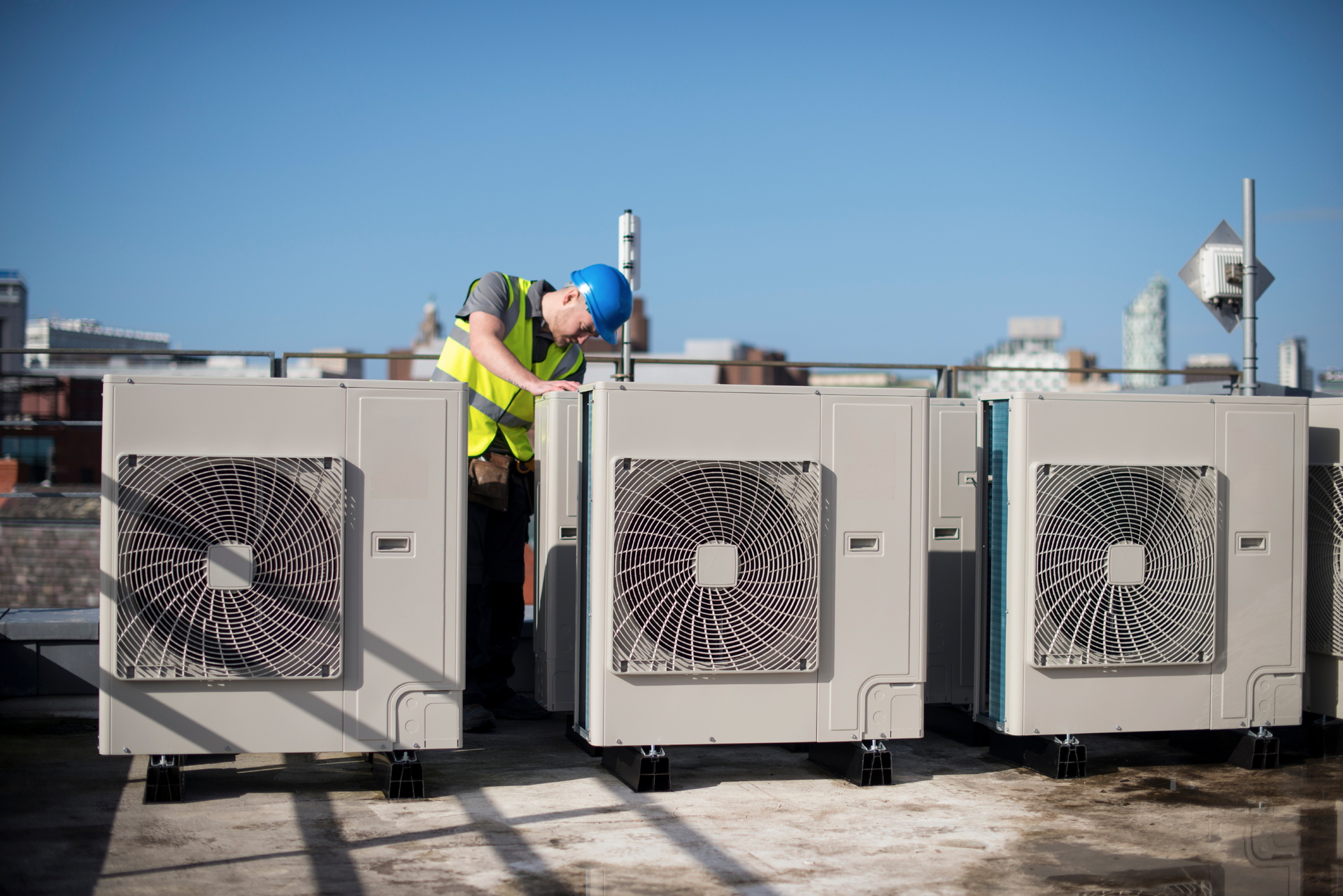
Most commercial facilities use a rooftop packaged HVAC unit for heating and cooling. These units are heat pump systems that circulate refrigerant to transfer heat: in heating mode, they move heat from outside to inside, and in cooling mode, the process reverses.
The power of these units is measured in BTUs (British Thermal Units), where one BTU is the amount of heat needed to raise the temperature of one pound of water by 1°F. While a typical window air conditioner can move about 5,000 BTUs of heat per hour, commercial systems are much more powerful, hence the use of the larger measurement of tons to describe their capacity. One ton of heating or cooling power equals 12,000 BTUs. The term “ton” originates from the amount of heat energy needed to melt a ton of ice in an hour.
How to Determine the Right HVAC Tonnage for Your Commercial Facility
The range of tonnage for commercial air conditioners and heaters is vast. While residential systems range from 1.5 to 5 tons, commercial systems can be 10, 25, or 50 tons, with larger facilities often using multiple 50-ton units for adequate heating and cooling.
This highlights the importance of working with experienced commercial HVAC contractors for heating and air conditioning installation or replacement. Only a trained and experienced contractor like the ones on our team can accurately determine the right tonnage to ensure comfort, process efficiency, and equipment protection. Incorrect tonnage can lead to significant issues and high replacement costs for inadequate equipment.
Trust our technicians to collaborate with you in assessing your facility’s specific needs. They will perform a heat load calculation to understand how your facility traps and generates heat, using this information to determine the proper tonnage.
Key Takeaways About Commercial HVAC Tonnage
The terminology of commercial HVAC can often seem confusing to those outside the industry—a common trait of specialized fields. However, our commercial HVAC experts take pride in collaborating closely with all our clients. This dedication is one reason many customers remain loyal to us for life. We aim to ensure you understand your commercial HVAC equipment and its operations.
Frequently Asked Questions
Question: What does “tonnage” mean in commercial HVAC?
Answer: In commercial HVAC, tonnage refers to a system’s cooling or heating capacity, not its physical weight. One ton equals 12,000 BTUs per hour, which measures how much heat the system can remove from or add to a space. The term comes from the amount of heat needed to melt one ton of ice in 24 hours.
Question: Why is HVAC tonnage important for commercial buildings?
Answer: Proper tonnage ensures your system can maintain consistent indoor comfort and operate efficiently. If the unit is too small, it may struggle to keep up with demand. If it is too large, it can cycle on and off too frequently, leading to higher energy costs and unnecessary wear.
Question: How is the right HVAC tonnage determined for a building?
Answer: HVAC professionals calculate tonnage using a detailed load calculation. This process considers building size, insulation levels, number of occupants, equipment heat output, windows, and overall layout. The goal is to match the system’s capacity to the building’s actual heating and cooling needs.
Question: What happens if a commercial HVAC system is oversized or undersized?
Answer: An undersized system may run continuously and still fail to maintain comfortable temperatures. An oversized system may short cycle, which reduces humidity control and increases mechanical strain. Both situations can reduce efficiency, increase operating costs, and shorten equipment lifespan.